Right in my own backyard, a passionate group of researchers vindicated by a recent large NSF grant are working to create the underlying technology to be able to "wire up" the world's rivers. A new, always on digital nervous system that matches low-cost "off-the-shelf" sensors and components with the power of cloud computing may be on the horizon.
This could transform the management of our watersheds forever. Bold Stuff. I like it. Clemson has branded/registered their effort as "Intelligent River". The first wired watershed will be the Savannah basin which forms the border between South Carolina and Georgia. It will be reportedly the largest basin-scale network in the United States.
A couple cool key technology components:
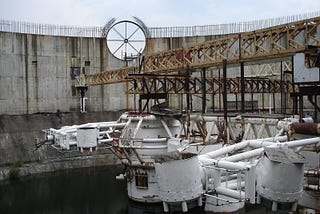
Motestack (The Digital Heart). This is a groundbreaking battery-operated computer the size of an apple. It is not a sensor. It allows an "unprecedented number of sensors to be deployed across a large area and operate as a highly efficient network. The MoteStack is inserted into a buoy system anchored to the river floor." The MoteStack can then process sensor data and transmit it over a cell phone signal to the cloud.
![]() |
| MoteStack being inserted into a Buoy. (Credit Clemson University) |
The NORAD Room. Not only will information will be displayed on an interactive website where folks can view multiple data sources and locations, but right now Clemson is building a room in which I visualize something akin to NORAD.
Dimly lit with cigar chewing water managers, this room will present to all the flood of data. Projectors will beam super realistic images of the river and numerical data. This system will actually also supposedly simulate the river with AVATAR level of detail and realism.
I thought this was a bit of technical bravo speak, until I researched who was helping with this. It is the same guy who worked in Hollywood and created the waves in the movie Titanic.While I like all the technological wonder, I do wonder how strong the handshake between this technology and the real world decision makers will be.
Learn more about this neat project here at their website.